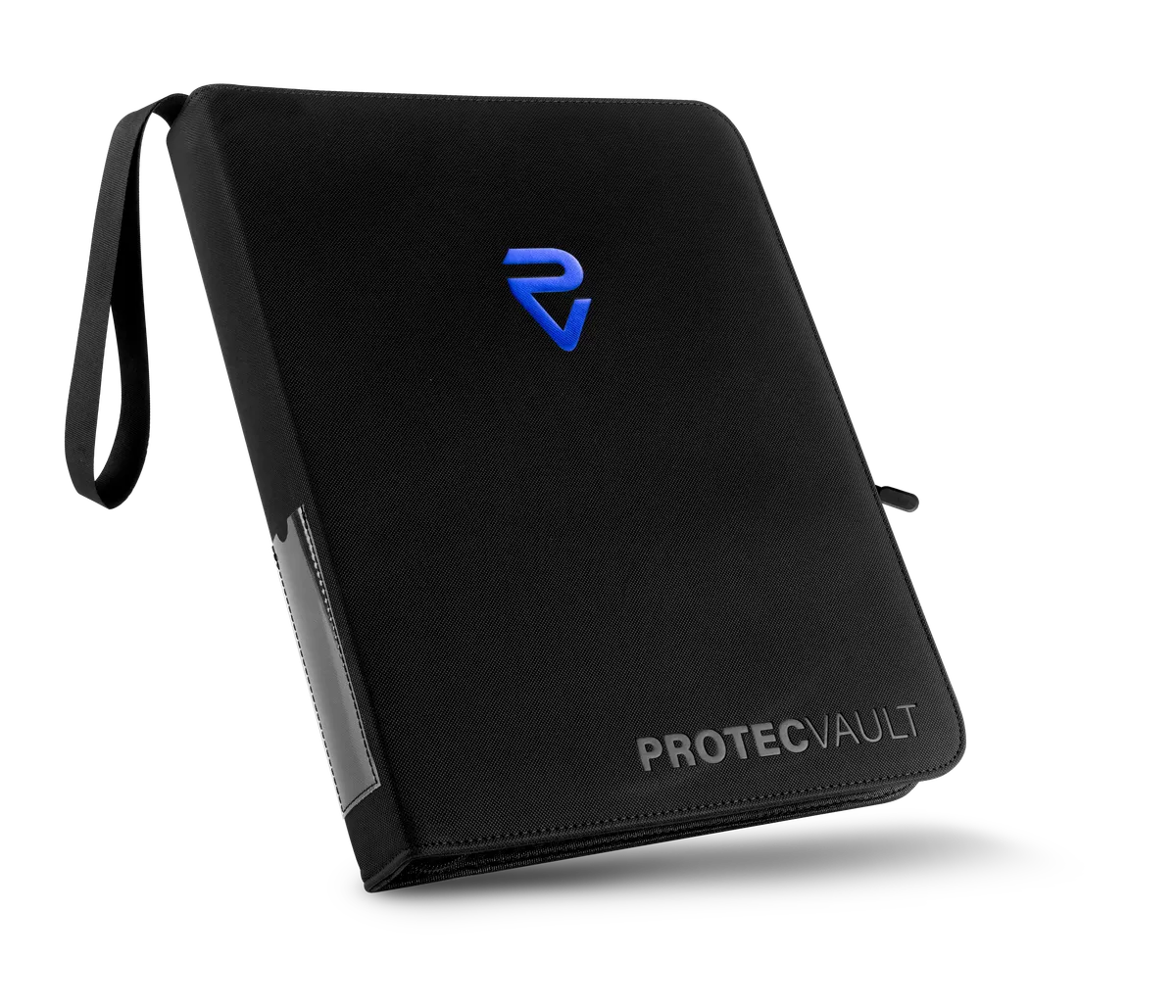
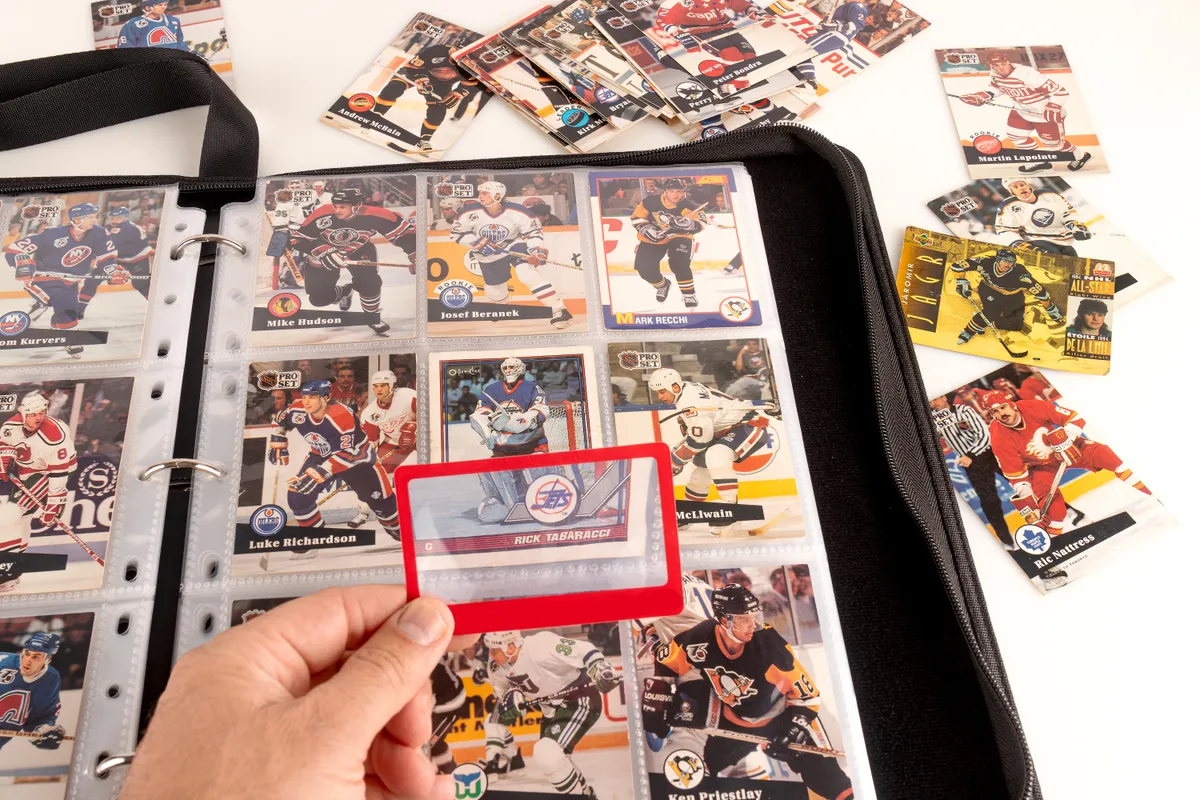
Card protection isn't one-size-fits-all. A common Pokemon card and a $5,000 Charizard need different approaches. This guide breaks down protection by value tier, so you spend the right amount on the right cards -- no more, no less.
The Protection Framework: Match Cost to Value
The fundamental rule of card protection: spend 1-5% of card value on protection, no more. A $5 card doesn't need $20 of protection (that's 400% overkill). A $500 card absolutely should not be in a $1 binder pocket.
Use this framework:
| Card Value | Protection Tier | Cost Per Card |
|---|---|---|
| Under $10 | Penny sleeve + binder pocket | $0.04-0.10 |
| $10-50 | Penny sleeve + premium binder | $0.10-0.20 |
| $50-200 | Double sleeve + toploader | $0.50-1.00 |
| $200-500 | Double sleeve + toploader + team bag | $1.00-2.00 |
| $500+ | Professional grading (PSA/BGS/CGC) | $20-150 |
Tier-by-Tier Protection Strategy
Tier 1: Bulk & Commons (Under $10)
The vast majority of your collection. These cards cost more to grade than they're worth, but they still deserve basic protection from scratches, dust, and chemical damage. The strategy:
- Penny sleeve each card (protects from surface scratches)
- Store in a PVC-free 9-pocket binder with side-loading pockets
- Avoid: PVC binder pages (cause yellowing and residue), top-loading pockets (cards fall out)
Tier 2: Notable Cards ($10-50)
Foils, full arts, and chase cards from current sets. These have value but aren't investment-grade yet. Strategy:
- Penny sleeve + insert into a premium PVC-free binder
- Store in a binder with full zipper closure (dust + spill protection)
- Keep these in the front pages of your binder for easy access
Tier 3: Investment Cards ($50-200)
Now we're in serious territory. These cards deserve rigid protection. Strategy:
- Double-sleeve: KMC Perfect Fit (inner) + Dragon Shield Matte (outer)
- Insert into a toploader (35pt or 55pt)
- Store toploaders in a dedicated toploader box or premium toploader binder
- Avoid: regular binder pockets (too thin to prevent bending under stress)
Tier 4: Chase Cards ($200-500)
Pre-grading territory. Even small surface damage destroys 30-50% of value at this tier. Strategy:
- Double-sleeve + toploader + team bag (moisture barrier)
- Store in a climate-controlled environment (40-55% humidity)
- Consider sending to grading if value justifies the cost
Tier 5: Grail Cards ($500+)
These cards need professional grading. The grading process verifies authenticity, assigns a permanent grade, and seals the card in a tamper-evident slab. Strategy:
- Send to PSA, BGS, or CGC for grading
- Use the appropriate service tier (Express for $200-500 cards, Walk-Through for $500+)
- Store graded slabs in slab boxes, not stacked or displayed in direct sunlight
Sleeves Explained: The Foundation of Protection
Sleeves are the first line of defense for every card. Here are the types you need to know:
Penny Sleeves (Soft Sleeves)
Thin clear sleeves, named because they cost about a penny each. Provide basic surface protection. Standard size: 2.625" x 3.625". Best brands: Ultra Pro, Dragon Shield. Use case: every card in your binder.
Perfect-Fit / Inner Sleeves
Tight-fitting clear sleeves designed to seal the card before adding an outer sleeve. Slightly larger than the card to create an air-tight seal. Best brand: KMC Perfect Fit. Use case: double-sleeving for $50+ cards.
Deck Protector Sleeves (Outer Sleeves)
Thick, durable sleeves designed for tournament play. Various finishes (matte, gloss, art). Best brands: Dragon Shield Matte, Ultra Pro Eclipse, KMC Hyper Matte. Use case: outer layer for double-sleeving.
Top-Loader Sleeves (Semi-Rigid)
Semi-rigid sleeves used for shipping or organizing graded cards. Made of polyethylene, they slide into binder pockets but offer minimal rigidity. Use case: protecting graded cards in transit.
Binders: For 80% of Your Collection
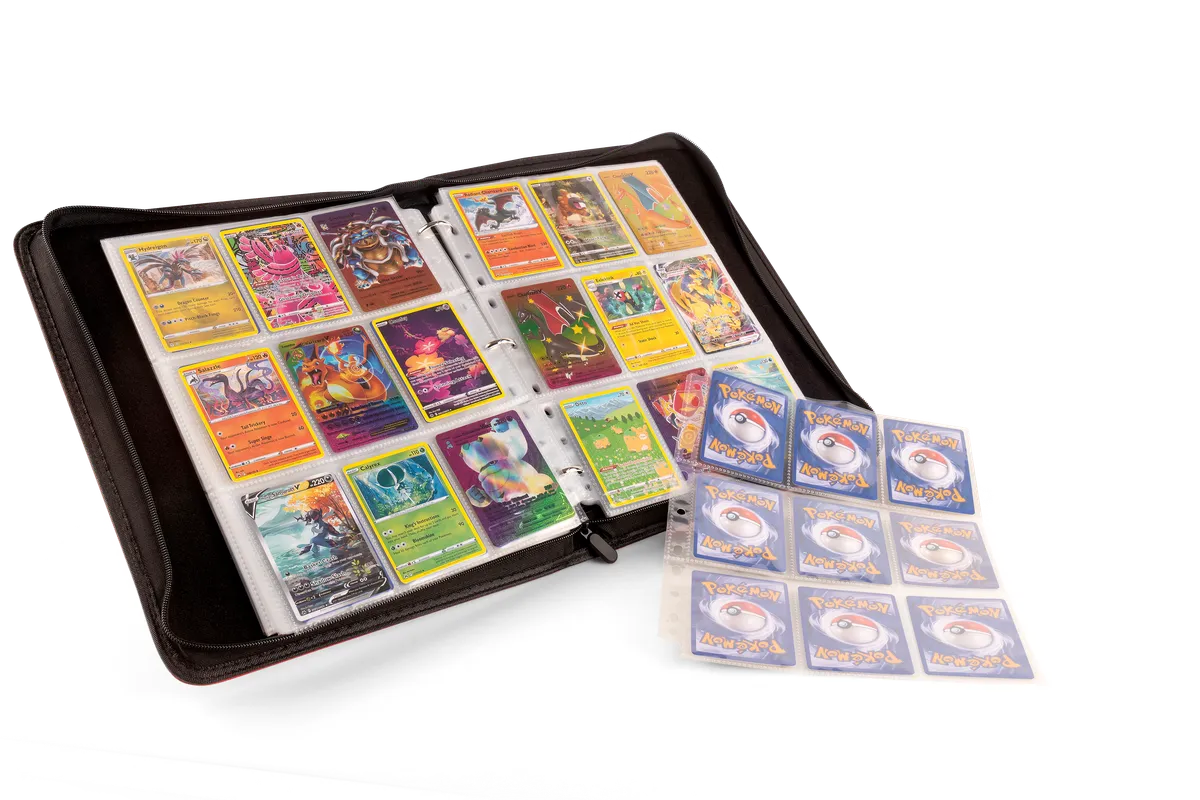
A quality binder protects 80-90% of any collection. The other 10-20% (high-value chase cards) belong in toploaders or grading slabs. Here's what to look for in a binder:
- PVC-free pages (non-negotiable -- see why PVC kills cards)
- Side-loading pockets (cards can't fall out)
- Full zipper closure (dust, moisture, accident protection)
- Water-resistant exterior (PU leather or proprietary materials)
- Adequate capacity (a 900-card binder costs less per slot than three 360s)
For our complete binder buyer's guide, see Best 900-Card Trading Card Binder.
Toploaders: Rigid Protection for Valuable Cards
Toploaders are clear, rigid plastic holders that protect cards from bending and corner damage. They're essential for cards worth $50+ that you want to keep in raw condition.
Toploader Sizes
- 35pt -- Standard cards (Pokemon, MTG, Yu-Gi-Oh)
- 55pt -- Slightly thicker, fits cards in penny sleeves
- 75pt-130pt -- Thick relics, autograph cards, jersey cards
Toploader + Sleeve Workflow
- Place card in penny sleeve (or perfect-fit + deck sleeve for double-sleeving)
- Slide sleeved card into the toploader
- Optional: Insert into a team bag (sealed plastic bag) for moisture barrier
- Store in a toploader box, sorted by set or value
Professional Grading (PSA, BGS, CGC)
Grading is the highest tier of card protection AND valuation. The card is authenticated, evaluated for centering, corners, edges, and surface, then sealed in a tamper-evident slab with a permanent grade.
The Three Major Grading Companies
| Company | Best For | Strengths |
|---|---|---|
| PSA | Pokemon, sports cards | Highest market value for PSA 10s |
| BGS (Beckett) | Modern sports, autographs | Subgrades, BGS Black Label premium |
| CGC | Magic: The Gathering, vintage | Best value, fast turnaround |
When to Grade
- Card value $200+ in raw condition
- Near-mint or better condition (centering, corners, edges, surface all 9+)
- Stable or appreciating market value (not in a hype cycle)
A PSA 10 card typically sells for 2-5x the raw price. Grading cost is $20-150 per card depending on service tier. For modern Pokemon chase cards in mint condition, grading is usually profitable within 3-6 months.
Environment Control: The Hidden Killer
Even with perfect sleeves and binders, environmental factors can destroy cards. The big three threats:
Humidity
Target: 40-55% relative humidity. Above 60% causes warping, foil curling, and mold. Below 30% causes brittleness. Use a hygrometer ($10) to monitor. Avoid storing in basements, garages, or near exterior walls in humid climates.
Temperature
Target: 65-75°F (18-24°C). Heat above 80°F accelerates chemical degradation in inks. Avoid attics, sun-facing rooms, and direct sunlight. Stable temperature matters more than the exact number.
UV Light
UV from sunlight or fluorescent bulbs fades card colors and yellows whites. Store binders closed, on shelves away from windows. For displayed cards, use UV-protective sleeves or display cases.
Common Protection Mistakes
- Using PVC binder pages -- silently destroys cards over months
- Top-loading binder pockets -- cards slide out during transport
- Skipping the inner sleeve when double-sleeving -- defeats the purpose
- Storing in the basement -- humidity destroys foils
- Stacking heavy items on binders -- causes warping and spine damage
- Direct sunlight -- UV fades colors permanently
- Touching cards with bare hands -- oils transfer and attract dust
- Over-grading -- sending $30 cards to PSA for $25/card grading fees (not profitable)
Frequently Asked Questions
How do I protect cards worth less than $10?
Penny sleeves + a PVC-free 9-pocket binder is sufficient. The sleeve prevents surface scratches, and the archival pages prevent chemical damage. Total protection cost: about $0.05 per card.
When should I start using toploaders?
For cards worth $50 or more. Toploaders provide rigid protection that prevents bending, corner damage, and edge whitening -- the three biggest value killers for graded-eligible cards. Always use a penny sleeve inside the toploader.
Is professional grading worth it?
For cards worth $200+ in raw condition, yes. PSA 10 graded versions typically sell for 2-5x the raw price. Grading cost is $20-150 per card depending on service tier. For modern Pokemon, grading at Card Ladder or PSA Express usually pays back within 3-6 months on chase cards.
Will humidity damage my cards?
Yes. Humidity above 60% causes warping, foil curling, and mold growth. Below 30% causes brittleness and cracking. Aim for 40-55% relative humidity. Store binders away from exterior walls, basements, and bathrooms.
Can I use any sleeve in a binder?
No. Standard deck sleeves work but penny sleeves alone are too thin for binder pockets (cards slide out). Best practice: penny sleeve the card, then insert into a side-loading binder pocket. For valuable cards, double-sleeve with KMC Perfect Fit + Dragon Shield Matte.
How do I prevent fingerprints on cards?
Always handle cards by the edges. Wash hands before touching. For grading-bound cards, wear cotton gloves. Once sleeved, fingerprint risk drops to near-zero.