Magic: The Gathering cards can hold value for 30+ yearsif stored correctly. A 1993 Black Lotus in mint condition sells for $250,000+. The same card with edge wear and corner damage drops to $40,000. The difference isn't luck -- it's preservation. This is the complete guide to keeping your MTG collection in near-mint condition for decades.
Why MTG Cards Are Especially Vulnerable
MTG cards have three characteristics that make them harder to preserve than other TCGs:
- Black borders. The black border on most modern MTG cards shows white edge wear immediately after even minor friction. Pokemon yellow borders hide the same damage.
- Foil sensitivity. MTG foils are notorious for curling. The unique foil lamination process used by Wizards of the Coast creates more curl than Pokemon or Yu-Gi-Oh foils.
- Active play culture. Most MTG cards are played, not just collected. Shuffling, drawing, and sleeve changes create constant wear. A card that's been in a Commander deck for 6 months has dramatically more wear than one stored in a binder.
The Five Pillars of MTG Card Preservation
Pillar 1: Sleeves (The First Layer)
Every MTG card worth keeping should be sleeved. Period. The cost is trivial ($0.02-0.10 per sleeve depending on quality) and the protection is absolute.
For cards under $20:
Single sleeve with a PVC-free penny sleeve (Ultra Pro, Dragon Shield) is sufficient. Insert the card with the front facing the seamless side of the sleeve.
For cards $20-100:
Double-sleeve. The combo: KMC Perfect Fit inner sleeve (creates an air-tight seal) + Dragon Shield Matte outer sleeve (cushioning and grip). This is the standard for any deck-played card worth more than a booster pack.
For cards $100+:
Double-sleeve PLUS toploader. Cards at this value should never be in a deck. Store them in toploaders inside a dedicated binder or storage box.
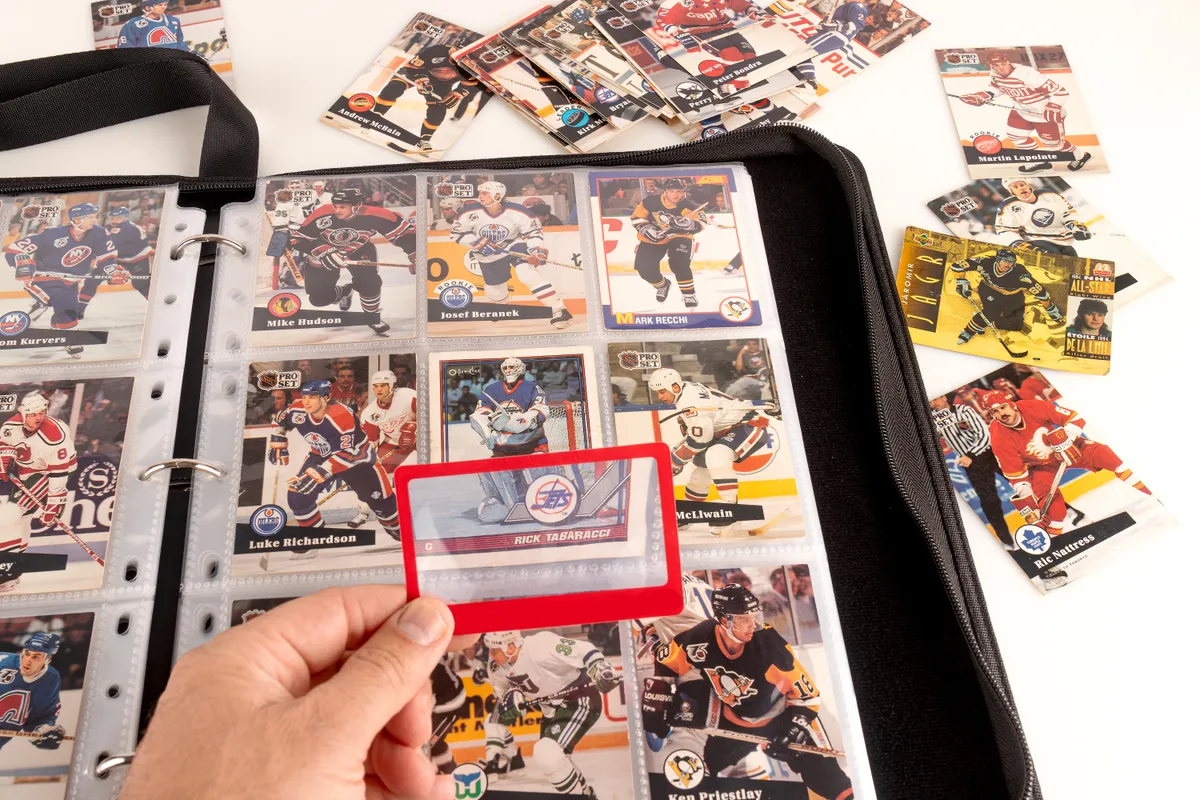
Pillar 2: Storage (The Second Layer)
Your sleeves are useless if your storage method damages cards. The two questions to ask:
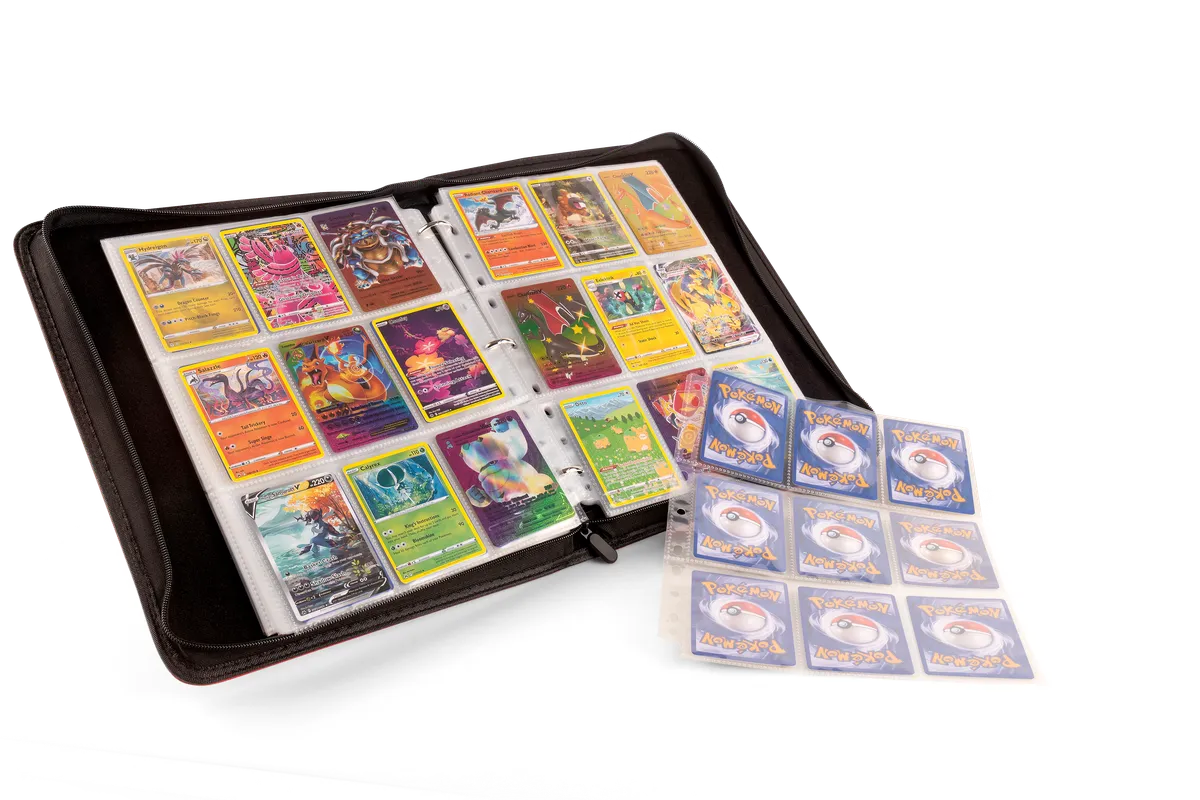
- Are the pages PVC-free? PVC binder pages contain plasticizers that off-gas onto cards over months, causing surface haze and yellowing. See the full PVC explanation here.
- Are the pockets side-loading? Top-loading pockets let cards fall out during transport. Side-loading is non-negotiable for tournament players.
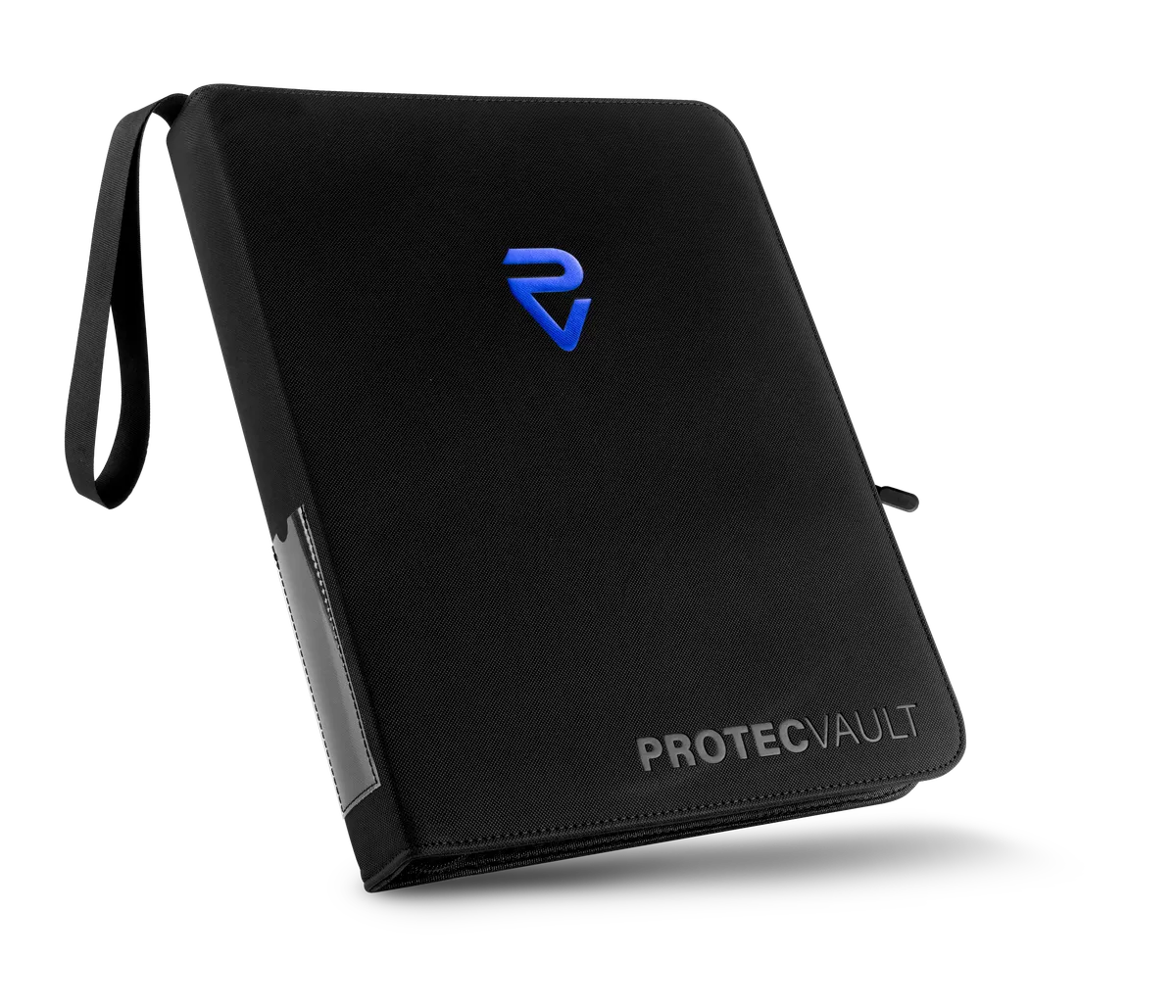
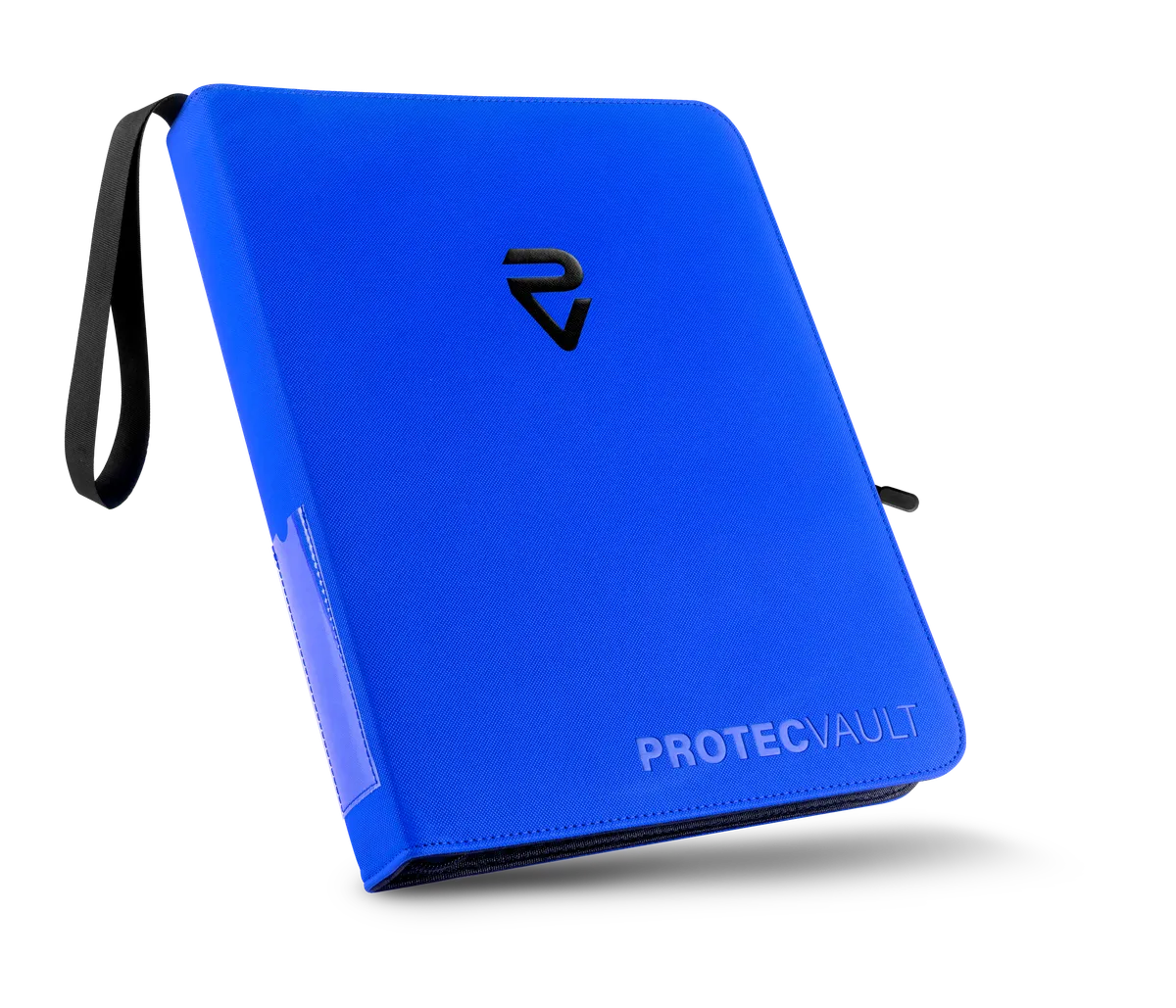
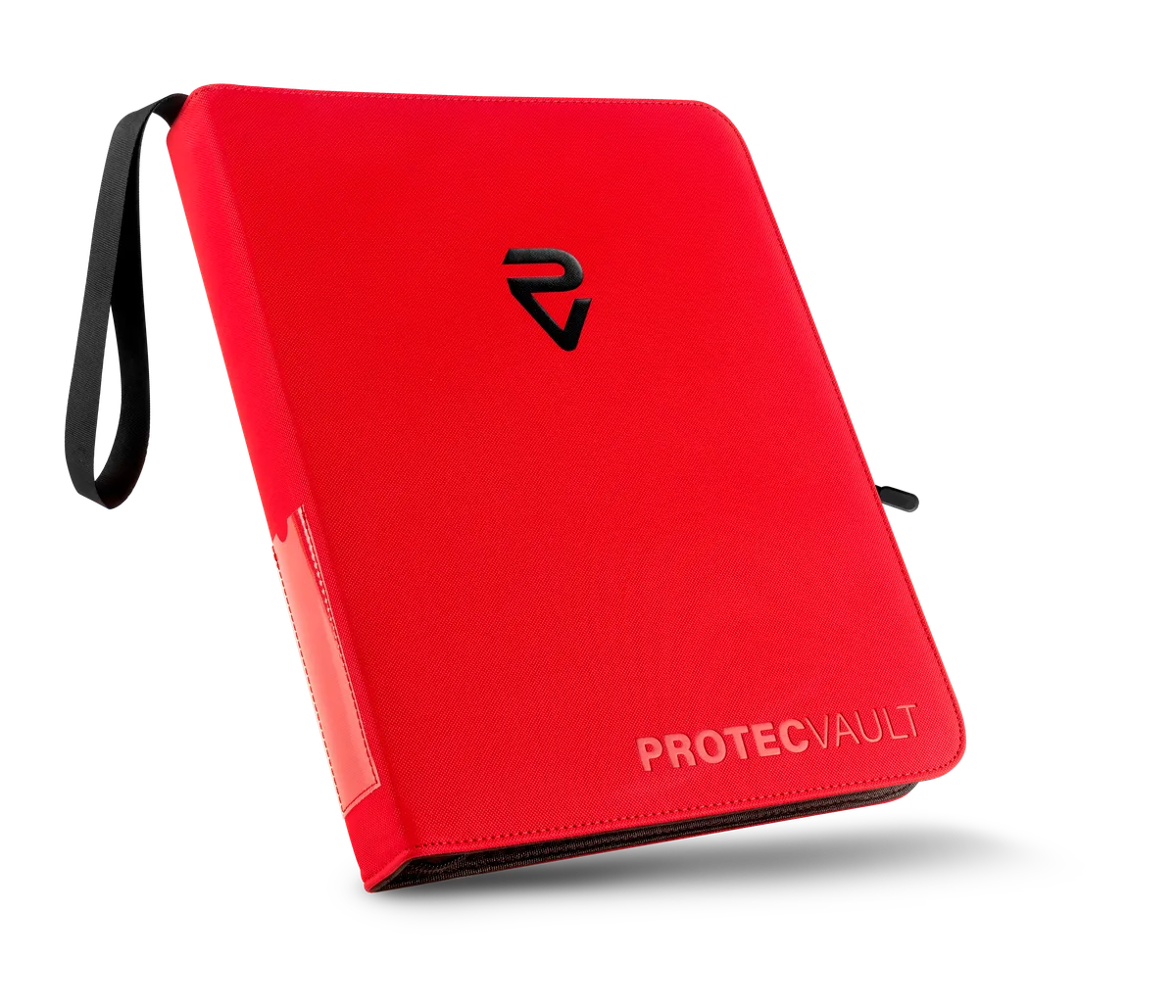
For Commander collections (typically 100-400 cards across 3-4 decks), a single 900-card binder organizes everything in one place with room to grow. See our 900-card binder guide.
Pillar 3: Climate Control
Climate is the silent killer of MTG collections. Three numbers to remember:
- Humidity: 40-55% relative humidity. Above 60% causes foil curl and warping. Below 30% causes brittleness.
- Temperature: 65-75°F (18-24°C). Avoid attics, garages, sun-facing rooms.
- Stability: Avoid rapid changes. A stable 70°F is better than fluctuating 60-80°F.
The biggest mistake MTG collectors make: storing in basements (usually 65-75% RH year-round) or garages (no temperature control). Read the complete humidity guide.
Pillar 4: Handling
Every time you touch a card without precautions, you risk damage. Best practices:
- Wash hands first. Skin oils transfer to cards and attract dust.
- Hold by the edges. Never touch the card surface, especially on foils.
- Penny sleeve before shuffling. Bare card shuffling causes immediate edge wear.
- Don't stack cards. Pressure causes warping over time.
- Use two hands when removing cards from binder pockets. Avoid bending corners.
Pillar 5: Inspection
Check your collection every 3 months. Look for:
- Foil curling or warping (humidity issue)
- Sleeve discoloration (PVC plasticizer damage)
- White edge wear on black borders (handling damage)
- Page sagging in your binder (overcrowding)
- Any musty or chemical smell (mold or PVC off-gassing)
Catching damage early gives you a chance to relocate cards before it becomes permanent.
Special Considerations by Format
Commander (EDH)
Commander decks are 100 cards each, mostly singles. With multiple decks, your collection grows fast. Strategy:
- Store inactive decks fully sleeved in deck boxes between sessions
- Keep your “deck pool” (cards you swap in/out) in a single 900-card binder
- Top 10% by value (chase mythic rares, foils): toploaders, not deck rotation
Standard / Modern
Tournament players cycle through cards quickly. A Standard rotation deletes value. Strategy:
- Sleeve everything, even bulk rares (you might need them when meta shifts)
- Track value via TCGplayer; sell or trade before rotation
- Don't over-protect cards you'll cycle in 6 months -- penny sleeves are enough
Vintage / Legacy / Reserved List
Cards with permanent format legality need permanent protection. Strategy:
- Never deck-play cards worth $500+. Get reprints or proxies instead.
- Double-sleeve + toploader for everything in this range
- Consider professional grading (PSA, BGS) for cards worth $1000+
- Climate-controlled storage is mandatory, not optional
The Cost of NOT Preserving Your Collection
Let's do real math. Say you have a Commander collection of 500 cards averaging $5 each = $2,500 value. With proper preservation (PVC-free binder $35.55, penny sleeves $15, climate control), your protection cost is ~$60. That's 2.4% of collection value.
Without preservation, expect to lose 30-50% of value within 5 years through wear, foil curl, edge whitening, and surface damage. That's $750-$1,250 in lost value to save $60 in protection. The math is brutal.
Common Mistakes MTG Collectors Make
- Storing decks unsleeved between sessions — bare cards in a deck box scratch each other
- Using PVC binder pages — silently destroys cards over months
- Mixing foils and non-foils in one binder — foils curl differently, can press into adjacent non-foils
- Overstuffing binders — pressure causes warping
- Storing in basement or attic — humidity destroys foils
- Not labeling binders — you'll forget what's in each one
- Skipping penny sleeves on bulk commons — today's bulk is tomorrow's playable
Frequently Asked Questions
What sleeves should I use for valuable MTG cards?
For cards worth $20+, double-sleeve with KMC Perfect Fit (inner) and Dragon Shield Matte or Ultimate Guard Katana (outer). The inner sleeve seals the card from dust and moisture, the outer provides cushioning and grip. For Commander tournament play, ensure sleeves match deck-wide for legality.
Are foils more sensitive than non-foils?
Yes, significantly. MTG foils are made by laminating a foil layer to the card stock, creating internal stress that responds to humidity changes. Foils curl, warp, and develop 'pringle chip' shapes when stored in unstable humidity. Always store foils in climate-controlled environments (40-55% RH) and avoid stacking heavy items on top.
How do I prevent MTG card edges from whitening?
Edge whitening is the #1 grade killer for MTG cards. Causes: shuffling without sleeves, dropping cards, friction in tight binder pockets. Prevention: always penny sleeve cards before shuffling, use side-loading binder pockets (not top-loading), handle cards by the edges only, and consider double-sleeving for any card you might sell or grade.
Should I store MTG cards in a binder or deck box?
Both, depending on use. Active deck cards belong in a deck box during play. Collection cards (cards you're not currently playing) belong in a PVC-free binder for organization and display. For long-term storage of valuable singles, use double-sleeves in a sealed binder with zipper closure to prevent dust and humidity damage.
How often should I check my MTG card storage?
Every 3 months at minimum. Look for early warning signs: foil curling, page warping, sleeve discoloration, or any moldy smell. Catching environmental damage in the first 6 months allows you to relocate cards before permanent damage occurs. After year 1 with stable conditions, annual checks are sufficient.
Will sleeving affect the long-term condition of MTG cards?
Only positively, IF you use the right sleeves. PVC-free sleeves (Dragon Shield, KMC, Ultimate Guard) are inert and protect cards indefinitely. PVC sleeves contain plasticizers that can chemically damage card surfaces over months. Always check the package for 'PVC-free' or 'archival' designations before buying sleeves in bulk.
Bottom Line
MTG card preservation isn't about being obsessive -- it's about being smart. Sleeve everything. Use PVC-free binders. Control climate. Handle by the edges. Check your collection quarterly. These five habits will keep your collection in near-mint condition for decades, preserving both gameplay and resale value.
Related Reading

ProtecVault Team
Trading card collectors. Built the binder we couldn't find.